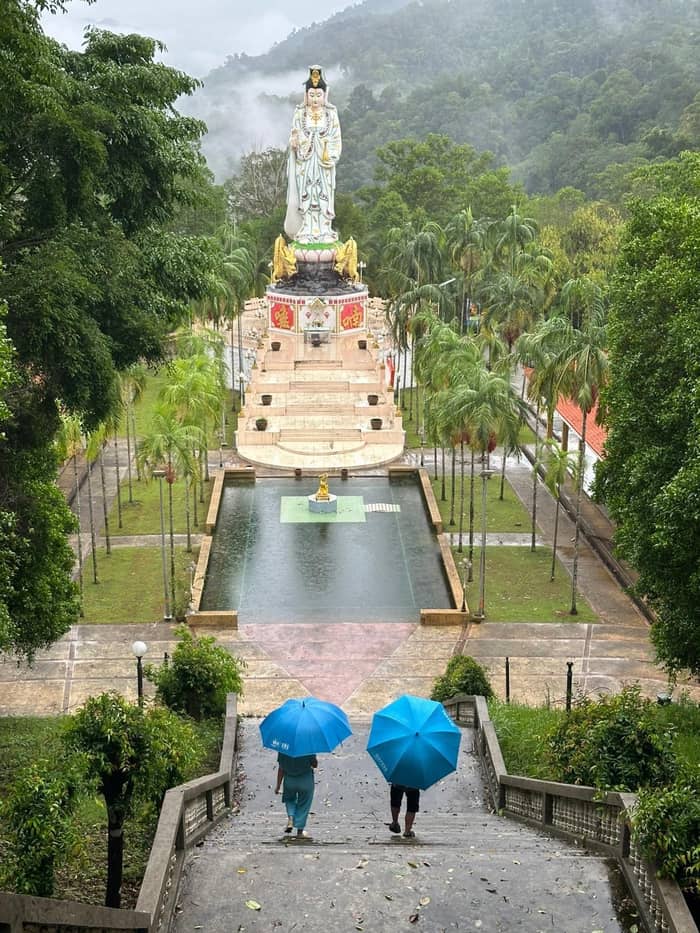
For everyone
Light trousers outfit
Cool, covered, easy to remove
See the dayPacking and prep checklist
List of 9 items
Tick each item when it is done. Your place is saved on this device.
0 / 9 ready
That is everything. Only the date and your hotel are left to choose.
Secure your spotTemple halls ask for covered shoulders and knees and for bare feet. Here is the official dress rule, what to pack for a long day of stairs, heat and monkeys, and a checklist.
Editorial team, khaolaktempletour.click · Updated November 16, 2026 · 6 min of reading
Summary view
Thai temples command deep respect, and the Tourism Authority of Thailand welcomes visitors who observe the etiquette.4 On clothing it is specific: men dress in a sleeved shirt with long trousers or knee-covering shorts, and women a sleeved top, never spaghetti straps, with a skirt longer than knee length.1
Tour listings repeat the rule in their own terms. The weekday-only day rules out short sleeves for guests of either sex and wants shorts to cover the knees. The German-language small group asks both men and women to cover knees and shoulders. The dearest full day goes furthest and warns that entry may be refused.
Treat the strictest version as the standard for the whole day. Cover your shoulders and your knees from the moment you leave the hotel, because changing between stops is awkward, and a wrap is hard to find once you stand at the steps of a hall. Packing for the strictest temple means that nothing is a problem at the others.
Who wears what
| Who | Wear | Avoid | Source |
|---|---|---|---|
| Men | Sleeved shirt, long trousers or knee-length shorts1 | Short sleeves on one listing | Tourism authority |
| Women | Sleeved top, skirt below the knee1 | Spaghetti straps1 | Tourism authority |
| Everyone | Bare feet in the hall2 | Stepping on a threshold5 | Tourism authority |
| Everyone | Covered knees and shoulders | Entry may be refused otherwise | Listings |
Taken from TAT and from the tour listings; a temple may apply a stricter rule on the day itself.4
Choose clothes that are light, loose and covered. Long trousers of thin cotton or linen, a loose shirt with sleeves over the shoulders (long ones if your listing bans short sleeves) and a scarf or sarong for emergencies work for both sexes. The day is warm and humid, so natural fabrics dry faster and cling less than synthetic ones, which matters on a day that includes long staircases.
Footwear needs care. You will take your shoes off at every temple hall, so wear sandals or slip-on shoes that you can remove in seconds, with grip for stairs that may be wet. One listing counts over 200 steps up to the first cave, and smooth soles on damp stone are a bad combination. Thin socks are a personal choice, but the guidance says to enter barefoot.2
Keep jewelry and valuables simple. A small bag that closes with a zip stays on your front through crowded doorways, and a hat that you can fold into it covers the sun between stops. Because shoes wait on open racks outside every hall, leave expensive pairs at the hotel and wear a pair you will not mind leaving outside.
Dressing in order
At the hotel
Cover shoulders and knees before you leave, because entry may be refused.
In the van
Women wear a sleeved top and a skirt below the knee, men a sleeved shirt.1
At the steps
The first cave has a long staircase on one listing.
At the door
Shoe racks stand outside, and visitors go in barefoot.2
Inside
Most temples have a raised threshold, to be stepped over and not on.5
At the monkeys
The cave front at Wat Suwannakhuha is a monkey feeding ground.3
How you move matters as much as what you wear. TAT notes that a raised threshold marks the door of most temples and that you cross it by stepping over, not onto it,5 and that anyone seated before a Buddha keeps their feet from pointing at the statue.8 Pointing at or touching a Buddha statue is out, as is turning your back on it, and sacred objects are passed clockwise.9
Monks come with their own etiquette. A woman keeps from touching a monk or his robes, and an offering for a monk is placed down for him or passed over by a man.10 If a monk comes near on the tour, step aside politely, leave the talking to your guide and lower your voice in any hall where people pray. A polite smile and a slight bow are enough if a monk greets you.
Cameras are welcome in most temples, though it is rude to block anyone at prayer or leaving money in a donation box.11 Ask your guide before you photograph a monk or a ceremony, skip the flash in caves and shrines, and put the camera down when the group sits for a talk, because a quiet moment belongs to the visit.
Pick your gear
Say what worries you most and see the item that helps.
If I worry about being turned away
Cover knees and shoulders
One listing warns that entry may be refused.
If I worry about the stairs
Sandals with grip
The first cave has a staircase of more than 200 steps on one listing.
If I worry about mosquitoes
Repellent in the bag
The tourism authority advises extra precautions in the monsoon.6
If I worry about the monkeys
Zip up loose items
A feeding ground of many monkeys lies in front of the cave.3
If I worry about the forecast
A rain layer and a spare day
The tourism authority points travelers to the Thai Meteorological Department.7
Outfits
For everyone
Cool, covered, easy to remove
See the day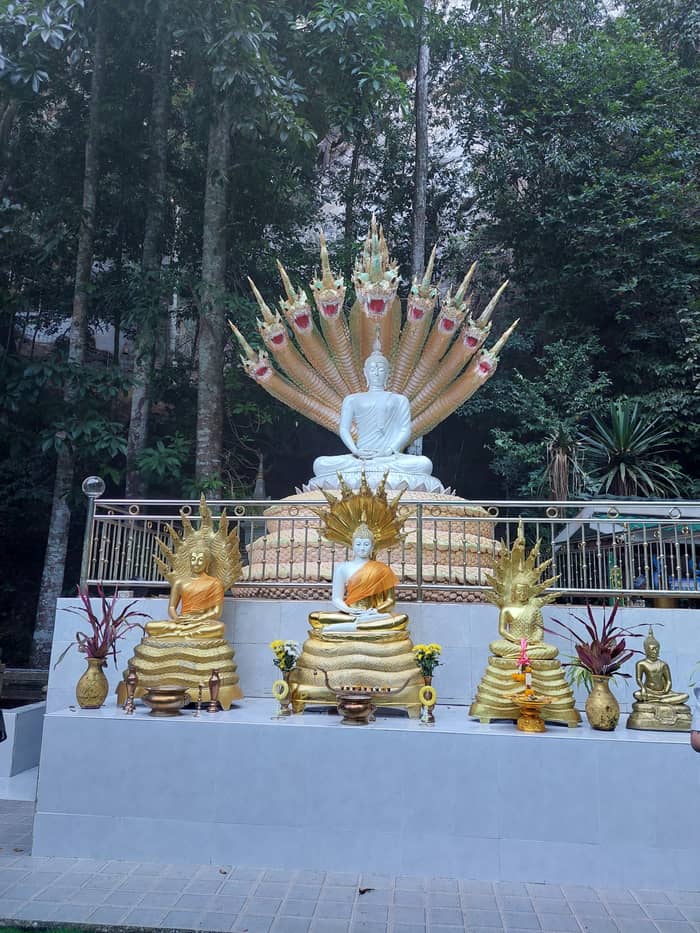
For women
Below the knee, sleeved top
See the day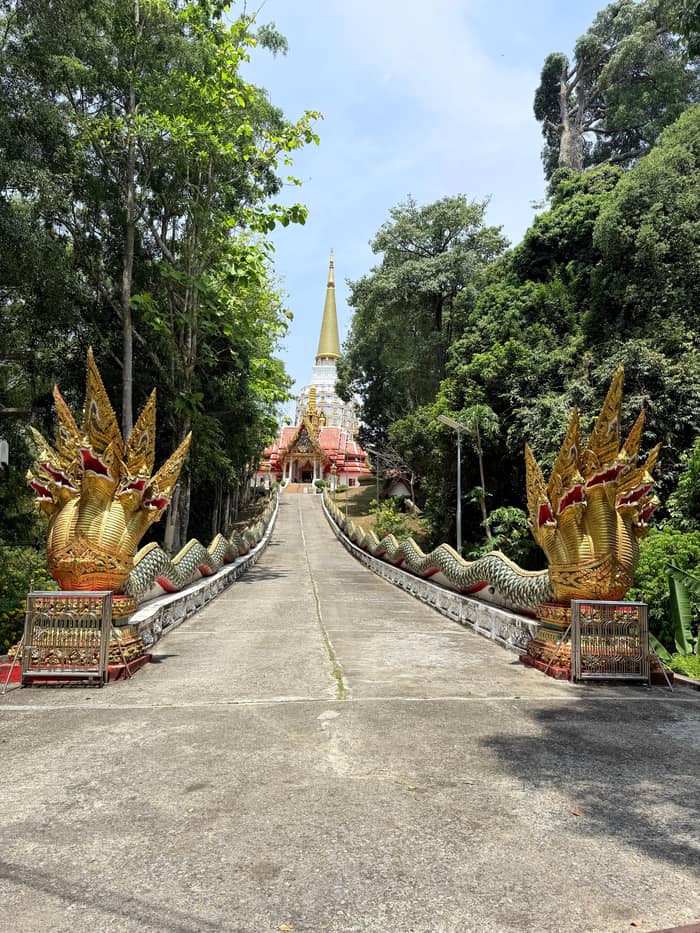
Wet season
Quick-dry layers
The final stop on the day sold here is a cave temple with a reclining Buddha, and the provincial guide says the area in front of the cave is a feeding ground of a large number of monkeys.3 They are wild animals, and they are used to visitors, which makes them bold. Recent reviews of the day sold here describe them as well behaved, and some mention that they take food from the hand.
Feeding is out. TAT's rules for meeting wild animals include keeping a distance and not feeding them; the advice was written about elephants, yet it fits monkeys as well.12 Hide food and plastic bags, pocket your phone while you walk past and never reach toward an animal. Plastic wrappers are food to a monkey, so keep every pocket zipped.
Should a monkey approach, stay calm and back away without shouting or running. Children need an adult within arm's reach, and hats, glasses and loose items make easy targets, so zip them into a bag. A Khao Lak tour guide reads the animals' habits better than a visitor can, so follow that lead at the gate. Never offer food to settle an animal, because that only invites the next approach.
Nine hours is a long day, so pack with care. Water comes first, since stairs and heat drain you, and any shop stop is a chance to refill. Sun cover helps on the hilltop, though one listing says hats and sunglasses come off inside temples and places of worship, so bring a bag for them. Keep the bag light, because every extra item has to climb the stairs with you.
Among the Khao Lak travel tips that matter most for a temple day, water comes first, and small notes for donations come second, since a few coins are enough. A light rain layer or a compact umbrella belongs in the bag in every season, since showers are common in the wet months and the road between temples is open to them. Insect repellent is worth packing as well, because the tourism authority advises extra precautions against mosquitoes in the monsoon, when they breed in standing water.6
Pack a small towel, tissues and hand sanitizer for the stops where soap is not on offer. A phone with a charged battery serves as your camera and your map, and a power bank saves the afternoon. Leave the large camera bag at the hotel unless photography is your reason for coming, because every extra item has to be carried up the stairs. A zip bag for wet clothes is cheap and saves a damp rucksack.
Video
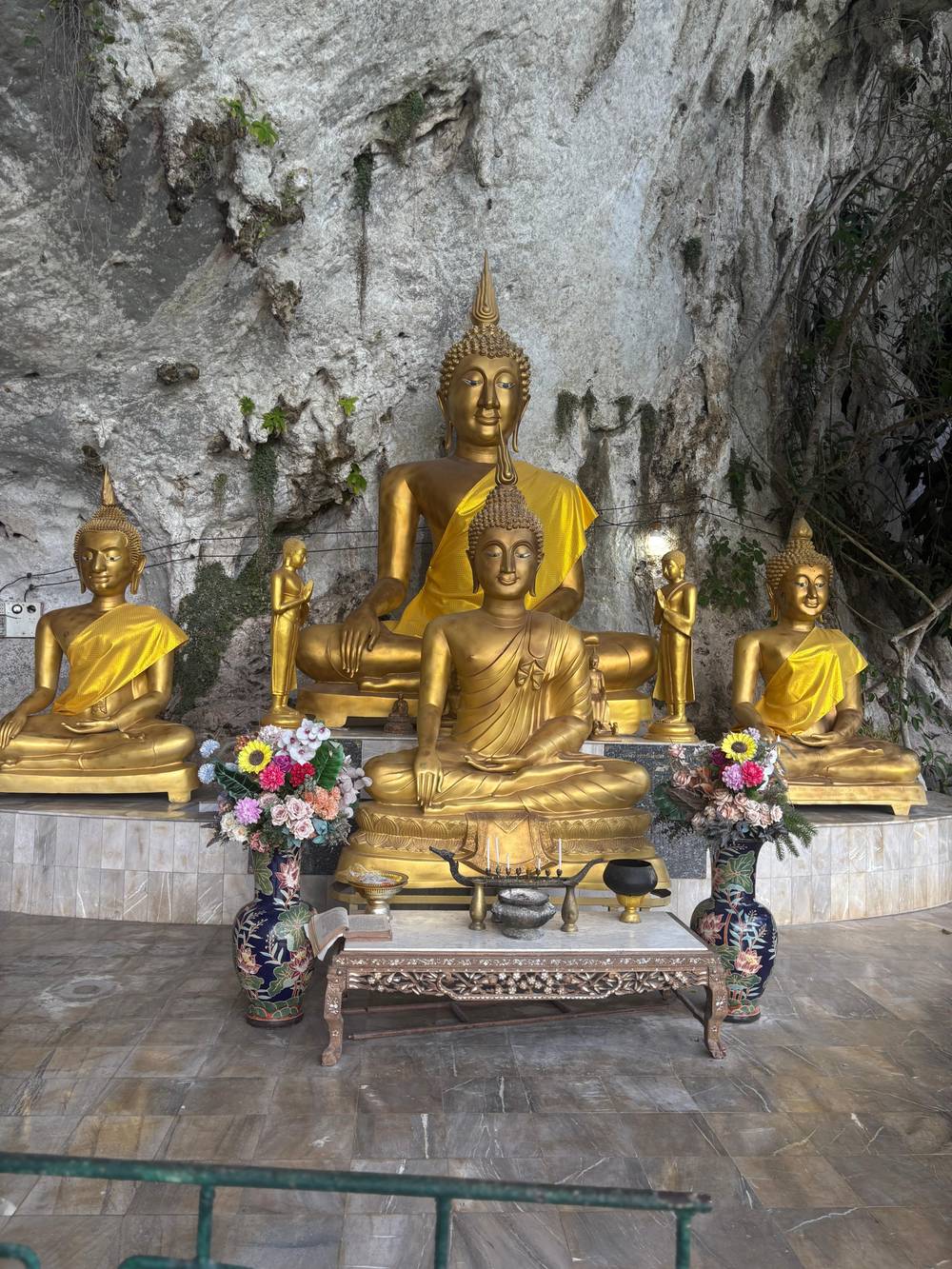
Andy Wright Thailand Travel on YouTube · Video data is requested only when you tap play.
For men, this means a shirt with sleeves and long pants or shorts that cover the knees. For women, it means a skirt that is longer than knee length and a top that has sleeves, not spaghetti string straps
Stairs set the real physical limit of the day. The listing that opens at the Dragon Cave puts the climb above 200 steps and steers away anyone with limited mobility, and the cave temples and the hilltop pagoda add more climbing. Go at a steady pace, take breaks in the shade and hold the rail on damp steps, because a slip on wet stone is the most likely mishap of a temple day.
Weather changes the clothing plan. The tourism authority tells travelers to follow the daily forecasts of the Thai Meteorological Department,7 and the plan of the day sold here can shift when the weather turns. On a showery morning, wear quick-drying trousers and keep a dry shirt in a bag, because wet cotton is cold in an air-conditioned van. Keep your phone in a zipped pocket as well.
Heavy rain adds one more caution. Flash floods strike caves, lakes and waterfalls hardest, as the UK government's travel advice points out,13 so let the guide decide whether a cave is safe on the day. Follow instructions even if a stop is shortened, and treat a changed plan as a sign of good judgment.
FAQ
Everyone needs sleeves and covered knees: men in long trousers or shorts to the knee, women in a skirt past the knee.1
One listing says short sleeves are not allowed and shorts must cover the knees.
Yes: the racks outside are for your shoes, and TAT expects visitors to enter barefoot.2
One listing warns that entry may be refused without the right dress.
Mostly yes; just stay out of the way of worshippers who are praying or donating.11
The tourism authority lists refraining from feeding wildlife among its basic rules.12
The tourism authority tells travelers to follow the daily forecasts of the Thai Meteorological Department.7
Sources
Planning the temples from Khao Lak? Ask a real person here.