Easiest
Cool and dry
December to February
See the temple toursPacking and prep checklist
List of 9 items
Tick each item when it is done. Your place is saved on this device.
0 / 9 ready
That is everything. Only the date and your hotel are left to choose.
Secure your spotThe temple day runs all year, but caves, steps and monsoon showers change how it feels. A month-by-month look at rain and heat, plus the festivals and the shoulder weeks.
Editorial team, khaolaktempletour.click · Updated November 16, 2026 · 7 min of reading
Summary view
If you ask when to visit Khao Lak for the temples, the short answer is the dry, cooler months. TAT describes a cool season of lower temperatures and humidity across much of the country, with November to February the pick of the year for travel,1 while for the peninsula's west coast (Phuket, Krabi, Phi Phi) the same article names November through April as the time to visit.2 On the Andaman coast the true dry season arrives around December, TAT says.3
That answer fits the temple day well. The steps at the caves are easiest when they are dry, the views from Bang Riang are clearest when the air is clear, and the monks are in their usual routine, not in the Lenten retreat. January sees 31 mm of rain on 3 wet days at the Phuket airport station,4 a very different experience from a September morning. Khao Lak tours still run in the wet months, so the choice is about comfort and not about possibility.
For quieter temples and lower prices, aim for the edges of the season. TAT suggests the shoulder weeks at either end for the quietest trip,6 and adds that wet weather can drag on into October and the start of November, and that boat crews sometimes stay in port when waves are high.7 A temple day is by road, not by boat, so the shoulder weeks are a good fit for it, and the spare day TAT suggests building into a plan8 gives you room to swap the temple day if a storm blows through.
The numbers on this page come from the weather station at Phuket airport, with Surat Thani filling a couple of gaps; the chart and table above name the stations month by month. Treat the figures as averages of past years, not as a forecast for your week. Across the dry stretch the gauge shows January at 31 mm and February at 34 mm,4,4 with daily highs averaging 32 °C for January against 33.2 °C for February.4,4
Heat and the first showers come in the spring. March has 115 mm and April 121 mm of rain, with highs averaging 33.6 °C in each.4,4 These are the hottest months for steps, so choose the earliest pick-up you can, keep a hat on and plan to rest in the shade between stops, because the cave stairs hold the heat. From May the rain turns heavy: 278 mm in May and 343 mm in June, on 14 and 15 wet days.4,4
The peak comes in September and October, with 406 mm and 365 mm of rain on 18 wet days each.4,4 November still brings 256 mm,4 and then the rain falls away: December has 75 mm on 6 wet days and a daily high of 31.7 °C.4 That makes December and January a sweet spot for visitors who want comfortable temperatures and few wet days, and it explains why the temple vans fill up first in those months and why booking ahead pays off.
Month by month
Months compared by sunless hours at mid-month and days with 2.5 mm or more of precipitation. NOAA station Phuket Airport (temperatures and rainfall for 10 months, rainfall only for 2 months) and Surat Thani (2 months), 1991 to 2020.4
Rain does not ruin the day. TAT points out that the monsoon, running from May to October, is not continuous rain: a shower typically lasts 1 to 2 hours and turns up after midday or toward dusk.10 Temple days start in the morning, so the first stops are often dry. Reviewers of the site's day mention rain on the day, and the listing says the plan may change for bad weather or other unforeseen reasons.
The caveat is the caves. The UK government warns that after heavy rain flash floods are a particular danger in lakes, caves and waterfalls,12 and TAT suggests watching the Thai Meteorological Department's daily forecasts, which carry flood and mud slide warnings too.13 A guide who skips a cave after a night of storms is protecting you. Treat any change as a reason to enjoy the other stops more, not to ask for a refund.
Wet months bring other small hazards. Mosquitoes breed in standing water, and TAT advises extra precaution against them during the monsoon,14 so a repellent belongs in the day bag. Roads can flood, so allow slack in your day; the 1 hour drive to the first stop on one listing can run longer after a downpour. Shoes with grip matter more than shoes that look smart, because tiled temple floors turn slick.
Pick your month
Name the thing you most want to dodge and the answer points to part of the year.
If I hate rain
December to February
If I hate heat
September or October
If I want fewer crowds
The shoulder weeks
TAT recommends them for the quietest trip.6
If I want to see monks in retreat
The rainy season
Lent marks its start.5
If I want a festival
Autumn
The vegetarian festival falls in the 9th Chinese lunar month.11
Pick a season
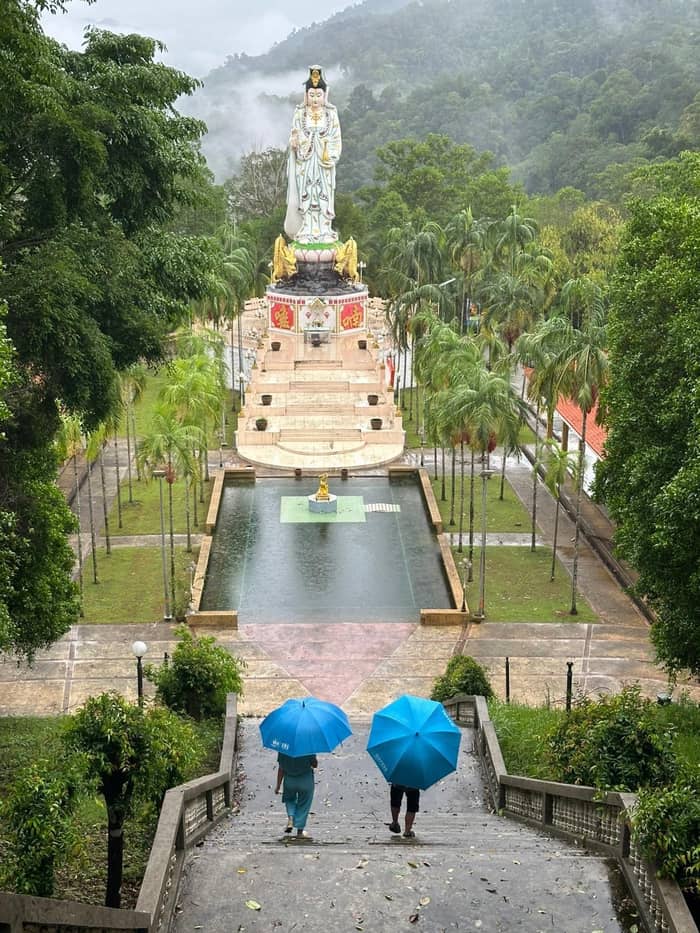
Easiest
December to February
See the temple tours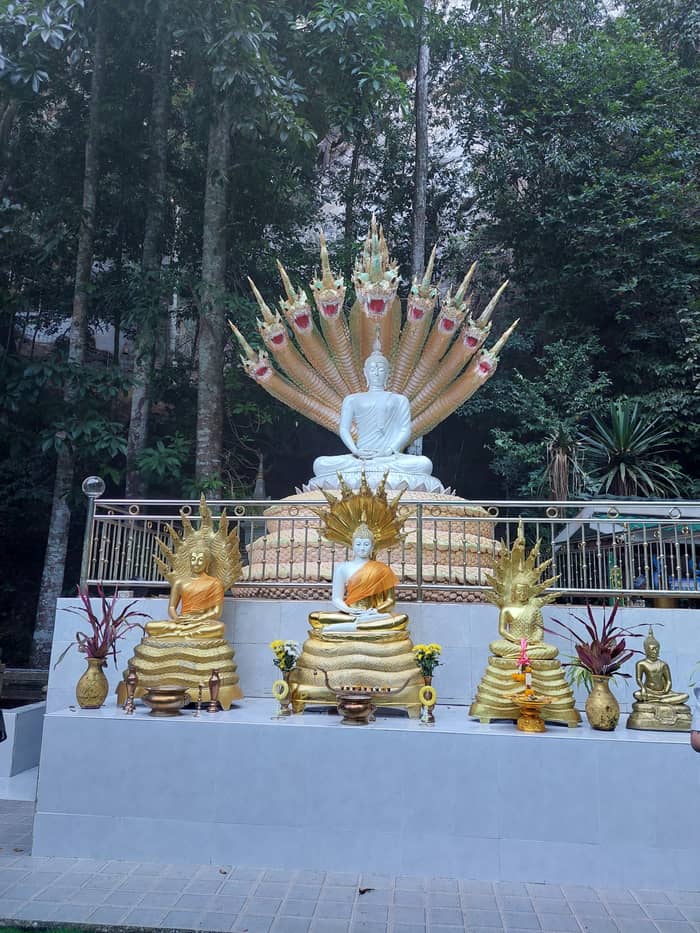
Hottest
March and April
See the temple tours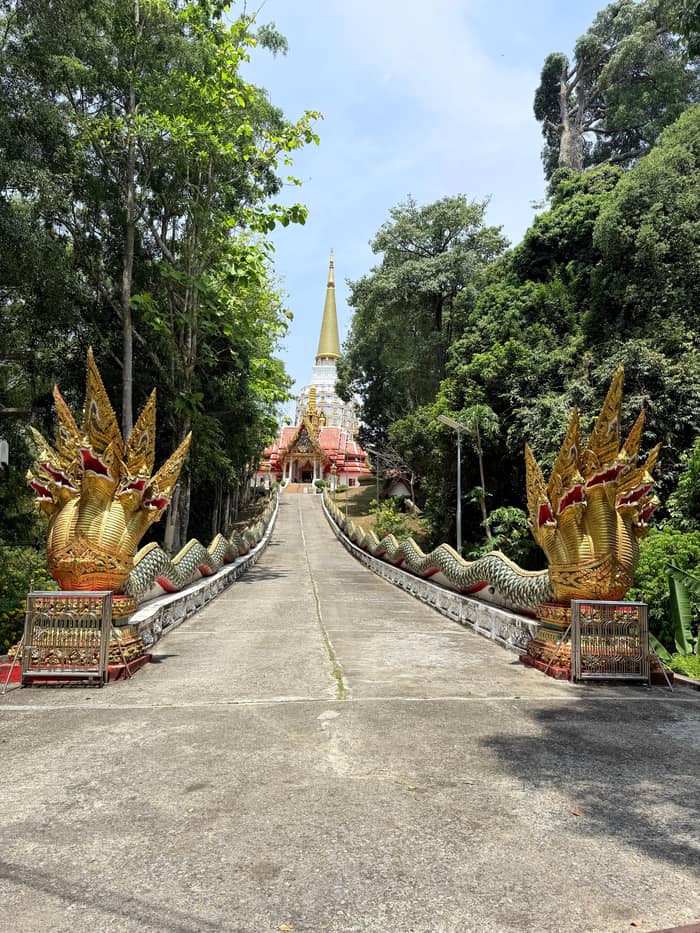
Showery
May to October
See the temple toursHeat is the quiet factor in the dry months, and it affects people differently, so ask each member of the group how they feel at every stop. Highs of 33.6 °C are the average in March and in April,4,4 and the coolest months for high temperatures are September at 30.9 °C and October at 31 °C.4,4 Nights stay warm all year, so the day does not really cool off until the evening drive back, and a shaded stop at lunch is a pleasure in every month.
Plan your photographs around the light. A pick-up in the early morning gives the Dragon Cave Temple soft light at the entrance and a cooler climb. The afternoon stop at Wat Suwan Khuha is often warm and busy, and reviewers note monkeys and a busy final temple. If you want a quiet cave and a good image of the reclining Buddha, ask for the earliest departure the operator offers, and keep a lens cloth ready for the moment you walk from the heat into cool damp air.
Daylight itself changes little in the tropics, so the day tour is never a race against sunset, but it can be a race against the afternoon storm, which is why the early start matters in the wet months. Carry water in every season, and refill at lunch instead of at the last stop; a 9 hour day with more than 200 steps at one stop is a long time in the sun.
Choose a day
Select a group size and see what each full day costs.
Review 3 options
Select a group size and see what each full day costs.
≈
View≈
View≈
ViewGetYourGuide's starting prices, converted at the ECB reference rate; exact pricing appears when you book.
The year at the temples
Cool dry months
The dry season settles in by December.3
Hot spring
Rains return
May brings 278 mm of rain.4
Buddhist Lent
The retreat marks the start of the rainy season.5
Autumn festivals
The vegetarian festival brings villagers in white to shrines.9
Late wet season
Wet weather can drag on into October and early November.7
The Buddhist calendar shapes the temples, and its main marker for travellers is Khao Phansa. TAT dates the start of Buddhist Lent to the morning after the full moon of the eighth lunar month, just as the rainy season opens,5 so monks are settled in their temples for the wet months. The Dragon Cave Temple page of this site explains the retreat, and a listing's note about meditation there in the wet season fits the same rhythm.
In September or October the Phang-nga Vegetarian Festival, set by the 9th Chinese lunar month, brings villagers in white to Chinese shrines to receive alms.11,9 Because both calendars follow the moon, the dates shift from year to year, so check the current year before you plan a trip around either. A temple visit during a festival can be busier, and the roads near the shrines can be slow, but it is also a chance to see the temples in use and to ask a guide what the ceremonies mean.
Takua Pa has its own heritage event. TAT's festival calendar listed the Ngo Ka Ki Festival for 11-12 October 2025 at the Ban Hok Jong Seng Office in Takua Pa District,16 recreating the golden era of the old mining town.17 Check the TAT calendar for the current year, because festival dates move. A temple day during a festival can be busier, and the roads near the shrines can be slow, but it is also a good chance to see the temples in use and to talk to a guide about what the ceremonies mean.
Video
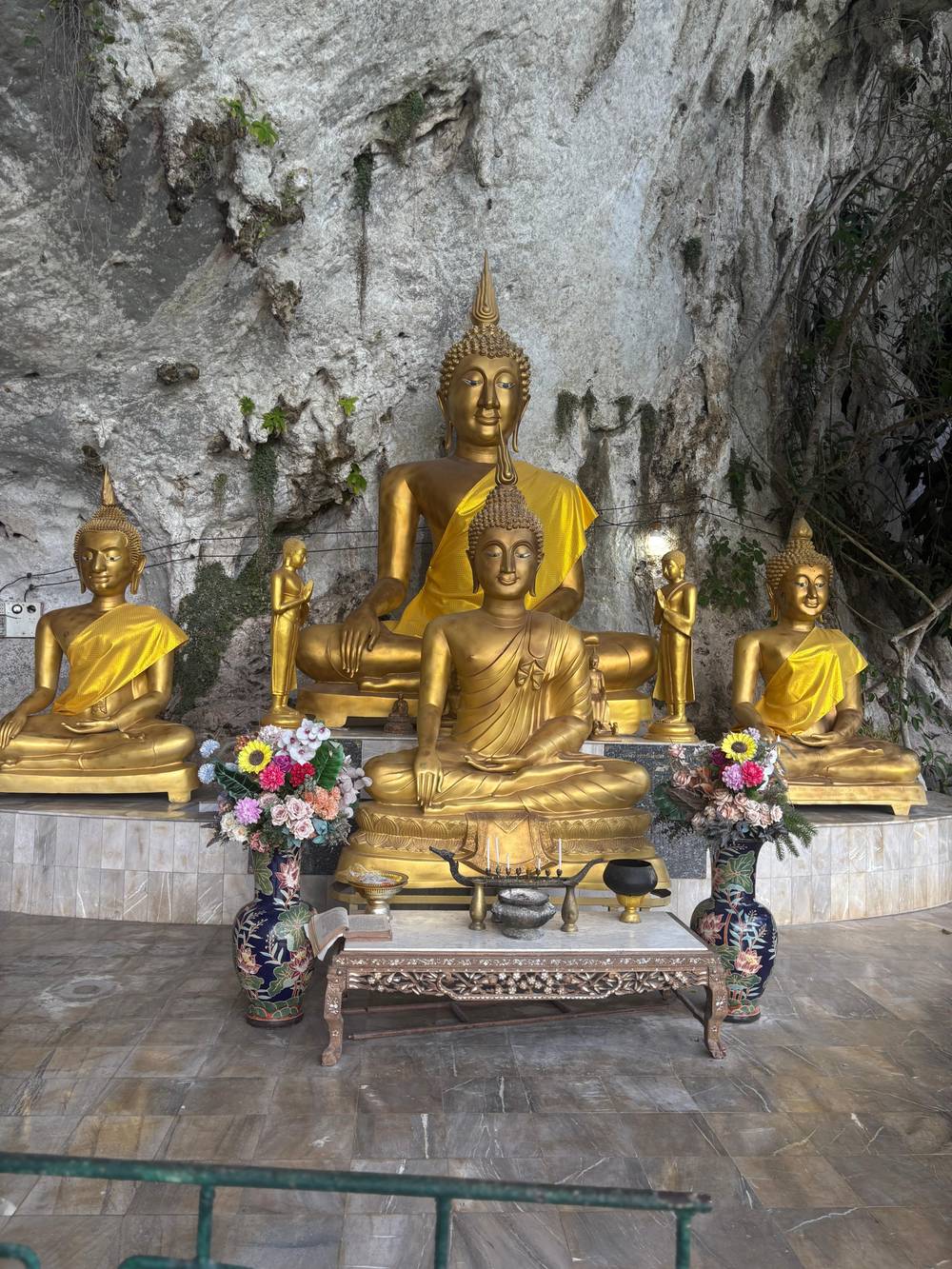
Ning in Khao Lak on YouTube · Video data is requested only when you tap play.
If you want the quietest trip, aim for the shoulder weeks at either end of the season
Visitors who go on tours in Khao Lak in high season find crowds and fuller vans. TAT recommends reserving early for December and January, naming ferries and island rooms,15 and the same logic applies to a temple day with a small group, which has a limited number of seats. In the shoulder weeks booking a few days ahead is often enough. Thanks to the pay-later option on the listing, you can hold a place and check the forecast afterwards.
Days of the week matter on some tours. One full-day listing with hotel transfers and lunch operates on Monday, Wednesday, Friday and Saturday and needs at least 4 participants, and a half-day listing notes that the Tsunami Museum shuts on Mondays and Tuesdays. If you are flexible, ask the operator which departures fill first and choose a weekday outside the weekend peak, which is usually a calmer day at the cave Buddha and at the lunch stop.
What to wear changes with the season. In the dry months a hat, light cotton that covers knees and shoulders and strong sunscreen do the job. From May on, add a rain jacket, a dry bag and shoes with grip. Knees and shoulders must be covered at the temples in every season, so a light long-sleeved shirt and a long skirt or trousers are the sensible year-round choice, with sandals that have a strap at the back or shoes that slip off easily at the racks.18
FAQ
The average is 406 mm of rain on 18 wet days.4
The listing says the itinerary may change in bad weather.
Lent opens the rainy season, with monks withdrawing to their temples.5
Heavy rain makes flash floods a special danger in caves.12
TAT recommends booking early for them.15
Sources
Planning the temples from Khao Lak? Ask a real person here.